

In today’s era of cloud computing, 5G, and high-definition streaming, network performance has become critical for both enterprises and service providers. High-speed and stable connectivity depends heavily on the quality of the underlying infrastructure, especially trunk cables. A reliable trunk cable manufacturer plays a pivotal role in delivering products that can handle massive data loads, minimize latency, and provide long-term durability. Leading manufacturers combine advanced materials, rigorous testing, innovative manufacturing, and comprehensive installation support to ensure their cables maintain high-speed network reliability under any conditions.
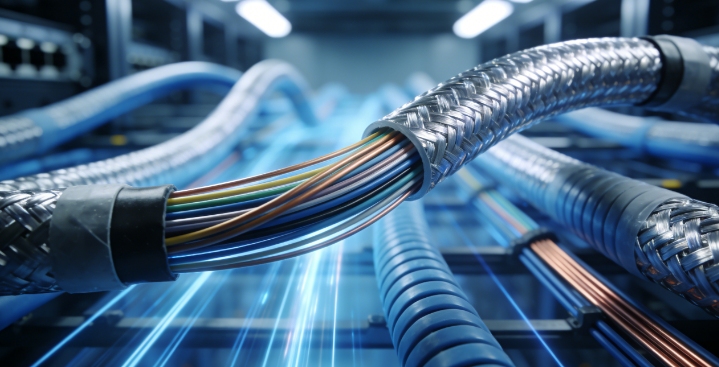
Advanced Materials and Cable Design
- High-Purity Conductors: Top trunk cable manufacturers use high-purity copper or advanced optical fiber cores. Copper conductors with low resistivity reduce signal loss, while modern optical fibers minimize attenuation over long distances.
- Enhanced Insulation: Innovative insulation materials, such as cross-linked polyethylene (XLPE) or flame-retardant polymers, prevent signal degradation and ensure resistance to electrical interference.
- Multi-Layer Sheathing: Protective layers, including outer jackets and armoring, safeguard cables from moisture, mechanical stress, and UV exposure. Certain outdoor trunk cables incorporate water-blocking gels to prevent internal corrosion.
- Optimized Cable Architecture: Bend-insensitive fibers, hybrid copper-fiber designs, and multi-core structures allow flexible deployment without compromising speed or signal integrity.
By carefully selecting materials and designing each layer, manufacturers ensure that trunk cables can sustain high-speed data transmission even in challenging environments like industrial zones or outdoor installations.
Rigorous Testing and Quality Assurance
- Comprehensive Performance Testing: Leading trunk cable manufacturers measure parameters like bandwidth, insertion loss, return loss, and crosstalk, ensuring cables perform at or above industry standards.
- Environmental Stress Testing: Cables are exposed to extreme temperatures, high humidity, mechanical tension, and bending cycles to simulate real-world conditions and guarantee reliability under stress.
- Global Certification Compliance: ISO 9001, IEC, TIA/EIA, and RoHS compliance ensure that cables meet international quality and safety standards.
- Automated Inspection: Modern production lines feature optical inspection, high-precision laser measurement, and continuous monitoring systems to detect defects or inconsistencies in real-time.
These stringent testing processes allow manufacturers to deliver trunk cables that not only perform at high speed but also maintain consistency and reliability throughout their service life.
Innovative Manufacturing Technologies
- Precision Fiber Drawing and Stranding: Advanced techniques maintain uniform fiber diameter and tension, reducing signal attenuation and enhancing high-speed data transmission across long distances.
- Automated Assembly Lines: Robotics and automated cabling systems reduce human error, improve consistency, and allow mass production of high-performance trunk cables.
- Custom Solutions for Networks: Leading trunk cable manufacturers offer tailored products for data centers, telecom networks, and enterprise b These can include hybrid designs, armored outdoor cables, or high-bandwidth indoor cables.
- Ongoing R&D: Continuous innovation allows manufacturers to develop next-generation fibers, low-latency copper conductors, or new insulation techniques, keeping their products aligned with evolving high-speed network requirements.
Through technology and innovation, manufacturers are able to provide solutions that optimize network speed, reduce downtime, and support growing data demands.
Installation Support and Long-Term Reliability
- Technical Guidance: Professional installation instructions and training reduce risks of signal loss due to improper handling or routing.
- Durability and Mechanical Resistance: High-quality construction ensures that trunk cables withstand heavy traffic, vibrations, accidental impacts, and environmental hazards without degradation.
- Maintenance and Upgrades: Top manufacturers offer support for network monitoring, preventive maintenance, and scalable solutions to accommodate network expansion.
- Extended Warranty and Service: Warranties covering performance over several years reflect the manufacturer’s confidence, reassuring businesses of long-term network stability.
Proper installation combined with ongoing support ensures trunk cables deliver their designed high-speed performance reliably throughout their operational life.
Conclusion
Ensuring high-speed network reliability goes beyond merely selecting any cable; it requires choosing a trunk cable manufacturer that emphasizes quality, advanced materials, rigorous testing, innovative technology, and comprehensive support. By investing in reputable manufacturers, businesses can achieve faster data transmission, minimize network interruptions, and future-proof their infrastructure. High-quality trunk cables are not just components—they are the backbone of modern, high-performance networks.