

The full form of IML robot is In-Mold Labeling Robot. It is an advanced automation system used in plastic injection molding processes to place pre-printed labels directly inside the mold before plastic injection begins. Once the molten plastic is formed and cooled, the label becomes permanently fused with the product surface, creating a seamless, durable, and high-quality finish. This technology is widely used in packaging industries such as food containers, cosmetics packaging, household products, and medical supplies. With the growing demand for efficient and visually appealing packaging, the IML system has become an essential solution in modern manufacturing, helping companies improve production speed, reduce labor costs, and enhance product branding.
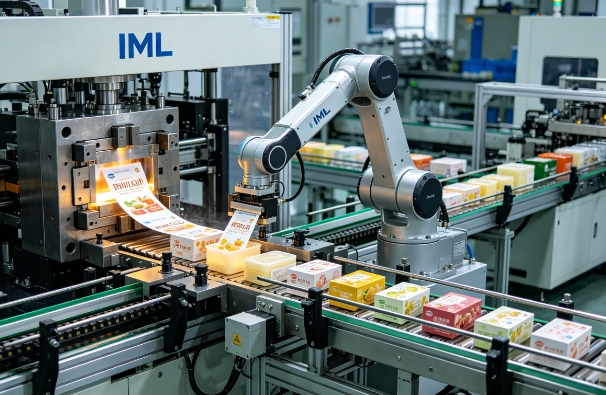
Working Process of In-Mold Labeling Technology
The operation of an IML robot is synchronized with the injection molding machine, forming a fully automated production cycle. Its working process is highly precise and involves multiple coordinated steps:
- The system first utilizes vacuum suction or mechanical grippers to separate and pick up pre-printed labels from stacks or hoppers, thereby ensuring that every single label remains intact and precisely positioned throughout the handling process.
- After picking, the robotic arm moves the label into the open mold cavity, where sensors and positioning systems ensure exact placement according to the mold design.
- Once the mold is closed, molten plastic is injected at high temperature, bonding the label permanently to the container surface as the material cools and solidifies.
- Finally, the finished product is automatically ejected, and the cycle repeats continuously, allowing uninterrupted mass production with minimal human intervention.
This integrated process eliminates secondary labeling steps and significantly improves production efficiency.
Core Components and Technical Advantages
Modern IML robot systems are built with advanced mechanical and electronic components that ensure accuracy, speed, and reliability in industrial environments. Their key elements include:
- Multi-axis servo system: Enables precise movement across X, Y, and Z directions, allowing flexible label positioning even for complex mold structures.
- Vacuum labeling mechanism: Provides stable suction control to handle thin film labels without folding, shifting, or static interference during transfer.
- Intelligent control interface: Operators can monitor real-time production data, adjust parameters, and troubleshoot errors through a touchscreen PLC system.
- High-speed motion control: Ensures short cycle times, making the system suitable for large-scale production lines with continuous output demands.
- Safety detection sensors: Automatically identify missing labels, incorrect placement, or system abnormalities to reduce defective products and downtime.
These technical advantages make the system highly efficient and suitable for modern automated factories.
Industrial Applications and Use Cases
The use of an IML robot spans multiple industries due to its flexibility and ability to produce high-quality labeled products. Its applications include:
- Food packaging industry: Used for yogurt cups, ice cream containers, and ready-to-eat food packaging, where hygiene, moisture resistance, and attractive branding are essential.
- Household goods production: Applied in storage boxes, plastic buckets, and cleaning containers, ensuring labels remain durable even under frequent use and exposure to water or chemicals.
- Cosmetics and personal care: Suitable for lotion bottles, shampoo containers, and cream jars, where premium visual appearance significantly impacts consumer purchasing decisions.
- Medical and pharmaceutical packaging: Used in medicine containers and diagnostic kits that require strict hygiene standards, clear labeling, and long-term durability.
- Industrial and chemical packaging: Helps create strong, resistant labels for containers exposed to harsh environments or chemical substances.
These applications demonstrate how widely this technology is adopted across global manufacturing sectors.
Benefits and Production Value of IML Automation
Using an IML robot brings significant advantages to manufacturers seeking to improve efficiency and competitiveness in packaging production:
- Enhance Product Appearance: The label becomes an integral part of the product itself, creating a smooth, scratch-resistant, and highly visually appealing packaging surface.
- Reduced production costs: Automation eliminates manual labeling, lowers labor expenses, and removes the need for adhesives or additional labeling equipment.
- Higher production efficiency: Labeling and molding are completed in one step, significantly shortening production cycles and increasing output capacity.
- Eco-friendly manufacturing: The process avoids glue usage and supports recyclable packaging materials, aligning with modern environmental sustainability goals.
- Stable quality control: Automated systems ensure consistent labeling accuracy, reducing human error and improving product uniformity across large batches.
These benefits make the technology highly valuable in competitive industrial markets.
Conclusion
In conclusion, the full form of IML robot is In-Mold Labeling Robot, a highly advanced automation system that integrates labeling directly into the plastic injection molding process. By combining precision robotics with efficient production techniques, manufacturers can produce high-quality, durable, and visually appealing packaging in a single streamlined operation. From food containers and cosmetic packaging to medical products, this technology plays a crucial role in modern industrial automation. As manufacturing continues to evolve toward smarter and more sustainable solutions, the importance of this system will continue to grow, making it a key technology in the future of packaging production.