

Hand-painted wooden fans are a beautiful blend of traditional craftsmanship and artistic expression. These fans are not only practical tools for cooling but also highly valued decorative items and cultural artworks. In many regions, especially in Asia and Europe, they are used for festivals, performances, home decoration, and souvenir collections. The creation process of hand-painted wooden fans involves careful material selection, precise craftsmanship, and detailed artistic painting techniques. Each piece is unique because it reflects the style and creativity of the artist. Understanding how these fans are made helps us appreciate the skill and cultural value behind them.
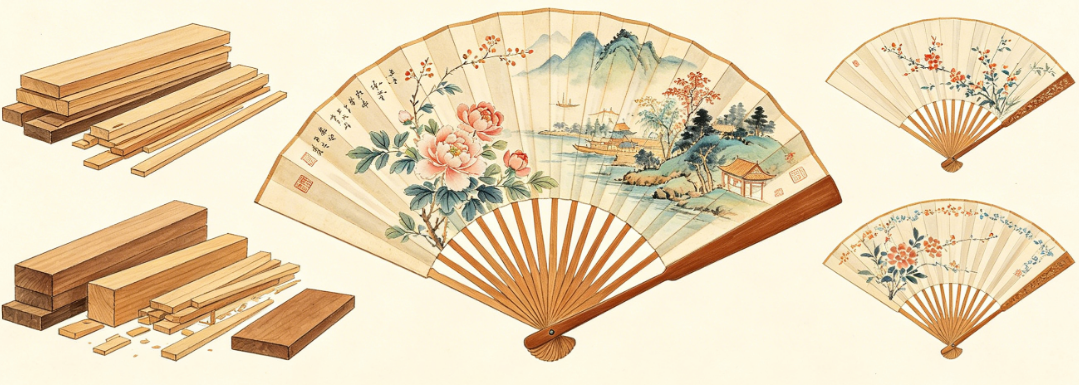
1. Material Selection and Wooden Frame Preparation
The first step in making hand-painted wooden fans is selecting the right materials and preparing the wooden structure.
- Choosing high-quality wood materials
Artists usually select lightweight yet durable woods such as bamboo, sandalwood, or basswood. These materials are strong enough to support repeated folding while remaining easy to carry. - Cutting and shaping the fan ribs
The wood is carefully cut into thin strips that form the ribs of the fan. Each strip must be smooth and evenly shaped to ensure proper folding movement. - Assembling the fan structure
The ribs are connected using metal rivets or string at the base, allowing the fan to open and close smoothly without damaging the structure. - Surface polishing and smoothing
Before painting begins, the wooden surface is sanded multiple times to remove rough edges and ensure a clean base for decoration.
2. Designing and Planning Artistic Patterns
Before painting begins, artists carefully design the visual concept of hand-painted wooden fans.
- Sketching initial design ideas
Artists often start with pencil sketches directly on the fan surface or on paper templates to plan composition and layout. - Choosing cultural or thematic elements
Designs may include flowers, birds, landscapes, traditional symbols, or abstract patterns, depending on cultural influence and customer preference. - Balancing visual composition
Since the fan surface is curved and segmented, artists must carefully distribute elements so that the design looks harmonious when fully opened. - Color planning and style selection
Color palettes are selected in advance to match themes such as elegance, vintage style, or vibrant modern aesthetics.
3. Painting Techniques Used by Artists
The painting stage is the most important part of creating hand-painted wooden fans, requiring precision and artistic skill.
- Base color application
Artists first apply a light base layer to ensure that the surface is ready for detailed painting and to enhance color durability. - Layered brushwork techniques
Multiple layers of paint are used to create depth and texture, especially for natural elements like flowers or landscapes. - Fine detailing with small brushes
Thin brushes are used to draw delicate lines, patterns, and highlights that give the fan its artistic identity. - Drying and color fixing process
After painting, the fan is left to dry naturally or under controlled conditions to prevent smudging and ensure long-lasting color quality.
4. Decorative Enhancement and Finishing Process
Once the painting is complete, additional decorative steps are applied to enhance the beauty of the hand-painted wooden fans.
- Adding protective coating layers
A transparent varnish or protective coating is applied to prevent fading, moisture damage, and scratches. - Incorporating decorative elements
Some fans may include gold foil, calligraphy, or embossed patterns to enhance visual appeal. - Attaching fabric or paper surfaces
Depending on design style, silk or high-quality paper may be attached to the wooden frame for additional artistic effect. - Quality inspection and refinement
Each fan is carefully inspected to ensure smooth movement, balanced structure, and flawless artwork.
5. Cultural Value and Modern Usage
Beyond craftsmanship, hand-painted wooden fans carry strong cultural and artistic significance.
- Traditional cultural symbolism
In many cultures, fans symbolize elegance, prosperity, and artistic refinement, often used in ceremonies or performances. - Popular decorative and gift items
These fans are widely used as souvenirs, wedding gifts, or home decoration pieces due to their artistic beauty. - Use in fashion and photography
They are also popular accessories in fashion shows, theatrical performances, and photo shoots. - Modern customization trends
Today, many artists offer personalized designs, allowing customers to customize patterns, names, or themes.
Conclusion
In conclusion, hand-painted wooden fans are not just simple cooling tools but highly artistic creations that combine craftsmanship, culture, and creativity. From selecting high-quality wood materials to detailed hand painting and decorative finishing, each step requires patience and skill. Artists bring life to every fan through unique designs and careful brushwork, making each piece one-of-a-kind. Whether used as decorative art, cultural souvenirs, or personal gifts, hand-painted wooden fans continue to hold strong aesthetic and cultural value in both traditional and modern markets.