

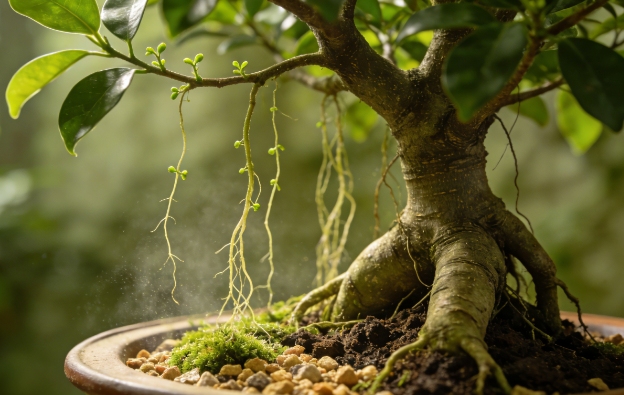
Developing a healthy and visually appealing aerial roots ficus bonsai requires patience, proper environmental control, and consistent care. The time it takes for a Ficus bonsai to grow aerial roots varies depending on species, climate, and cultivation techniques. For most growers, visible aerial roots can begin forming within a few months under ideal conditions, while fully mature and aesthetically balanced roots may take several years. Understanding the growth process is essential for achieving the desired structure and ensuring long-term bonsai health.
Factors That Influence Growth Time
The development speed of aerial roots ficus bonsai is influenced by several key environmental and biological factors.
- Humidity levels: High humidity is crucial; environments above 70% humidity can significantly accelerate aerial root formation, as moisture encourages roots to emerge from branches and trunks.
- Temperature conditions: Warm temperatures (typically 20–30°C) promote active growth. In cooler environments, the growth rate slows dramatically, sometimes delaying root emergence for many months.
- Tree age and species: Younger Ficus microcarpa trees tend to produce aerial roots more readily than older ones. Some species are naturally more inclined to develop aerial roots than others.
- Light exposure: Bright, indirect light supports strong growth. Insufficient light can weaken the tree and reduce the chances of aerial root development.
- Watering and nutrition: Balanced watering and proper fertilization provide the necessary energy for root formation and overall plant vitality.
Typical Timeline for Aerial Root Development
The time required to develop aerial roots in Ficus bonsai can vary depending on care conditions and techniques used.
- Initial stage (1–3 months): Small root buds begin to appear under high humidity and favorable conditions, especially when techniques like misting or humidity tents are applied.
- Intermediate stage (3–12 months): Roots gradually elongate and become visible, though they may still be thin and fragile. Consistent humidity and stable care are essential during this stage.
- Advanced stage (1–3 years): Roots thicken, harden, and integrate into the trunk or branches, forming a more mature and natural appearance.
- Full maturity (3+ years): Aerial roots become structurally strong and visually balanced, contributing significantly to the aesthetic value of the bonsai.
Techniques to Accelerate Root Formation
Experienced growers often use specific methods to encourage faster aerial root growth in aerial roots ficus bonsai.
Humidity control techniques:
- Use of plastic covers, glass enclosures, or humidity tents to maintain a moist microclimate.
- Regular misting to simulate tropical conditions and stimulate root emergence.
Air layering methods:
- Wrapping moist sphagnum moss around a selected area to promote root growth.
- This method can significantly shorten the time needed for visible root development.
Wound stimulation:
- Slightly wounding the bark can encourage the plant to produce roots in response to stress signals.
- This should be done carefully to avoid damaging the tree.
Pruning and shaping:
- Strategic pruning helps redirect energy toward root formation rather than excessive foliage growth.
Common Mistakes That Slow Down Growth
Improper care can significantly delay the development of aerial roots in Ficus bonsai.
- Low-humidity environments: Dry air is one of the main reasons aerial roots fail to form or develop properly.
- Overwatering or underwatering: Both extremes can weaken the plant and inhibit root growth.
- Insufficient lighting: Without adequate light, the plant cannot produce enough energy to support aerial root development.
- Temperature fluctuations: Sudden temperature changes can stress the tree and slow down growth processes.
- Lack of patience: Aerial root development is naturally slow; forcing the process too aggressively can harm the plant.
Conclusion
In summary, the time it takes to properly develop aerial roots ficus bonsai can range from a few months to several years, depending on environmental conditions, care practices, and the techniques used. While initial roots may appear relatively quickly under optimal humidity and warmth, achieving a mature and aesthetically pleasing structure requires long-term commitment. By maintaining stable conditions, using proper cultivation methods, and avoiding common mistakes, growers can successfully cultivate beautiful and healthy aerial roots that enhance the overall artistry of their bonsai.