

Melamine dinnerware is widely used in households, restaurants, cafeterias, and catering services due to its lightweight structure, durability, and resistance to breakage. Compared with ceramic and glass products, it offers a more practical and cost-effective solution for high-frequency dining environments. However, many users still ask how long it can actually last under proper care and maintenance. The lifespan of melamine dinnerware depends on material quality, usage habits, cleaning methods, and storage conditions. When used correctly and maintained properly, it can serve reliably for several years while maintaining both appearance and functionality.
Material Quality and Expected Service Life
The durability of melamine dinnerware is closely related to the manufacturing process and material grade.
- High-Density Molding Process: High-quality melamine products are molded under high temperature and pressure, forming a dense structure that effectively resists cracking and deformation. These products can typically last between 3 and 5 years in commercial environments and even longer in home use.
- Differences in product grades: Low-quality alternatives may use less stable resin mixtures, which lead to faster surface wear, discoloration, or structural weakening over time.
- Impact of usage environment: Frequent exposure to high heat, strong detergents, or heavy daily turnover in restaurants can shorten the lifespan compared to light household use.
Overall, better material quality significantly extends the usable life of melamine dinnerware.
Cleaning and Daily Maintenance Practices
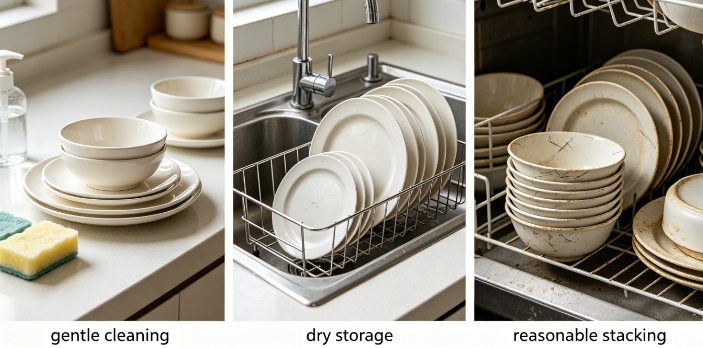
Proper cleaning is one of the most important factors in extending the life of melamine dinnerware.
- Use mild cleaning agents only: Harsh chemicals, bleach, or strong alkaline detergents may gradually damage the surface coating, causing dullness and loss of shine.
- Temperature control during washing: Although dishwasher-safe, repeated exposure to high-temperature wash cycles can weaken the structure over time. A moderate wash setting is more suitable for long-term use.
- Avoid abrasive tools: Steel wool or rough scrubbers can create fine scratches on the surface, which may accumulate stains and reduce aesthetic quality.
- Timely cleaning after use: Food residues, especially oily or strongly colored sauces, should be cleaned promptly to prevent long-term staining or odor absorption.
Consistent maintenance habits help preserve both appearance and hygiene.
Usage Habits That Directly Affect Durability
The manner in which melamine tableware is used in daily life has a significant impact on its service life.
- Avoid high-temperature exposure: It should never be used in microwaves, ovens, or placed near open flames, as excessive heat can weaken its molecular structure.
- Prevent impact and dropping: Although more durable than ceramic, repeated strong impacts can still cause edge chipping or internal stress cracks.
- Do not use for cutting food: Direct knife contact can create scratches that not only affect appearance but also reduce hygiene performance over time.
- Proper load handling in commercial use: In restaurants, avoiding overloading trays or stacking heavy items reduces stress and extends usability.
Good handling habits significantly improve long-term durability.
Storage Conditions and Long-Term Care
Proper storage is another key factor influencing how long melamine dinnerware can last.
- Dry and ventilated storage environment: Keeping items in a dry space helps prevent odor retention and surface dullness caused by humidity exposure.
- Avoid Excessive Stacking Pressure: Prolonged, heavy stacking may cause slight deformation or indentations in the items located underneath.
- Use separators when stacking: Soft liners or paper between plates can reduce friction and prevent surface scratches.
- Periodic Condition Checks: Regular inspections help identify signs of wear—such as cracks, discoloration, or surface damage—at an early stage, thereby preventing further deterioration.
These storage practices help maintain structural integrity and aesthetic quality.
Signs of Aging and When to Replace
Even with proper care, melamine dinnerware will eventually reach the end of its usable life.
- Surface dullness or fading: Loss of gloss is often the first sign of long-term wear caused by repeated washing and heat exposure.
- Visible cracks or deep scratches: These defects can trap bacteria and reduce food safety, indicating that replacement is needed.
- Warping or shape distortion: Exposure to excessive heat may gradually alter the original shape, affecting usability.
- Persistent staining or odor: When cleaning no longer restores the original condition, it signals material degradation.
Recognizing these signs early ensures safe and hygienic usage.
Conclusion
In conclusion, the lifespan of melamine dinnerware depends largely on material quality, usage behavior, cleaning methods, and storage conditions. With proper care and maintenance, it can last several years while maintaining durability and appearance. Gentle cleaning, correct usage, and careful storage all play important roles in extending its service life. Although it is not designed for permanent use, well-maintained melamine dinnerware remains a practical, cost-effective, and reliable choice for both household and commercial dining environments.