

Industrial floors are typically exposed to heavy machinery, constant foot traffic, oil stains, and dust accumulation, which often makes them look dull and worn over time. However, modern surface treatment solutions such as decorative epoxy flooring have changed the way industrial spaces are designed and maintained. This flooring system not only enhances visual appeal but also improves surface performance, making industrial environments cleaner, brighter, and more professional. As industries continue to focus on both functionality and aesthetics, decorative epoxy flooring has become an increasingly popular choice for upgrading traditional concrete floors.
Visual Enhancement and Surface Aesthetics
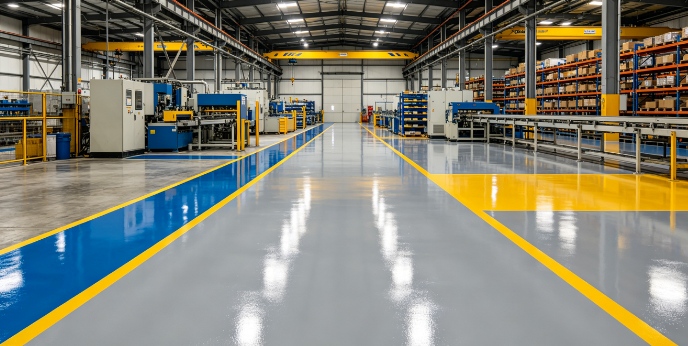
One of the most important benefits of decorative epoxy flooring is its ability to significantly improve the visual quality of industrial floors. Unlike raw concrete, epoxy creates a smooth and polished finish that transforms the overall environment.
- Glossy and reflective surface: The high-shine finish improves indoor brightness by reflecting available light, reducing the need for additional lighting in large industrial spaces.
- Color customization flexibility: Decorative epoxy flooring can be designed in different colors and patterns, allowing companies to create branded or visually organized work zones.
- Seamless appearance: The coating forms a continuous surface without joints or cracks, which makes the floor look cleaner and more structured.
- Modern industrial style upgrade: It replaces outdated grey concrete with a more professional and visually appealing industrial design.
These visual improvements make industrial environments look more organized and technologically advanced.
Durability and Protective Performance
Beyond appearance, decorative epoxy flooring also provides strong surface protection, which is essential in industrial environments where floors are constantly under stress.
- Resistance to mechanical wear: It can withstand forklift traffic, heavy equipment movement, and repeated impact without easily cracking or chipping.
- Chemical and oil resistance: Industrial spills such as grease, solvents, and cleaning chemicals are less likely to penetrate the surface, preventing permanent damage.
- Moisture barrier protection: The sealed coating prevents water absorption into concrete, reducing long-term structural deterioration.
- Extended floor lifespan: By reducing surface damage, decorative epoxy flooring helps industrial floors remain usable for many years without major repairs.
This combination of durability and protection ensures both functional stability and improved visual condition over time.
Safety Improvement and Functional Design
Decorative epoxy flooring also contributes to workplace safety and operational efficiency, which is critical in industrial settings.
- Anti-slip surface options: Depending on the finish, textured epoxy surfaces can reduce slip risks in areas exposed to liquids or oils.
- Clear zoning systems: Different colors can be applied to define walking paths, storage areas, or hazard zones for better workplace organization.
- Enhanced visibility: The reflective surface improves lighting distribution, making it easier for workers to identify obstacles and navigate safely.
- Dust control effect: Because epoxy seals the concrete surface, it reduces dust generation and helps maintain cleaner air conditions inside facilities.
These functional improvements help create a safer and more efficient working environment.
Installation Flexibility and Industrial Applications
Another advantage of decorative epoxy flooring is its adaptability across different industrial environments and installation conditions.
- Suitable for multiple industries: It is widely used in warehouses, factories, automotive workshops, and logistics centers.
- Custom thickness options: Depending on load requirements, epoxy layers can be adjusted for light-duty or heavy-duty applications.
- Application over existing floors: In many cases, it can be applied directly to prepared concrete, reducing renovation time and cost.
- Integration with equipment layout: The flooring system can be designed around machinery positions and workflow paths for better space utilization.
This flexibility makes it a practical solution for both new construction and renovation projects.
Maintenance Efficiency and Long-Term Value
In addition to improving appearance, decorative epoxy flooring offers long-term maintenance advantages that make it cost-effective for industrial use.
- Easy daily cleaning: The smooth surface allows dust, oil, and debris to be removed quickly without specialized cleaning methods.
- Reduced maintenance frequency: Its durability minimizes the need for frequent repairs compared to untreated concrete floors.
- Lower long-term costs: Although installation may require investment, reduced repair and cleaning costs provide long-term savings.
- Sustained visual quality: Even after years of use, epoxy floors maintain their color stability and gloss with proper care.
These benefits make it a sustainable flooring solution for long-term industrial operations.
Conclusion
Decorative epoxy flooring can greatly improve the appearance of industrial floors by transforming plain concrete into smooth, glossy, and visually organized surfaces. At the same time, it enhances durability, safety, and maintenance efficiency, making it suitable for demanding industrial environments. Through its combination of aesthetic improvement and functional performance, decorative epoxy flooring has become an effective solution for modern industrial facilities seeking both visual upgrades and long-term floor protection.